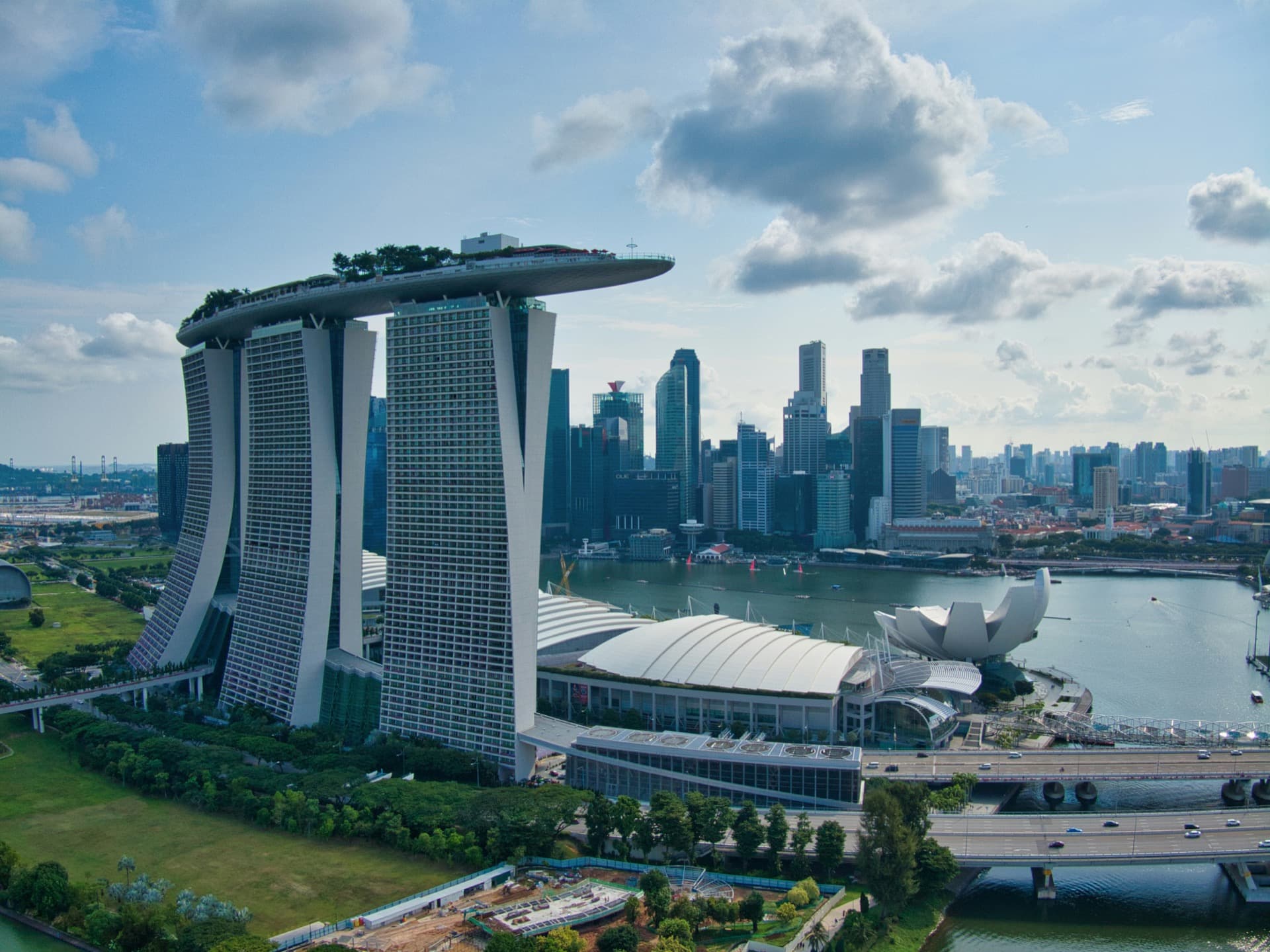
Singapore's precision engineering sector continues to demonstrate robust momentum: manufacturing output expanded 13.0% year-on-year in May 2026 and 7.2% in June 2026, driven by double-digit growth in precision engineering segments including optical instruments, electronic connectors, and semiconductor precision components.
This growth reflects a fundamental re-evaluation of global manufacturing supply chains. As multinational OEMs implement "China Plus One" strategies and navigate evolving trade policies, Singapore provides an established base combining precision technical execution with geopolitical predictability.
Here is an analysis of why engineering organizations across North America, Europe, and Asia choose Singapore for precision CNC machining and contract manufacturing.
1. Practical global time-zone coordination
Singapore’s geographic location provides a distinct operational advantage: direct collaboration with both North American and European engineering teams on the same business day.
- Morning Window (9:00 AM – 12:00 PM SGT): Aligns directly with the close of business on the US West Coast and evening hours on the US East Coast.
- Afternoon Window (2:00 PM – 6:00 PM SGT): Aligns with the start of the European business day in the UK, Germany, and Switzerland.
For precision contract manufacturing programs requiring rapid First Article Inspection (FAI) reviews, engineering change orders (ECOs), and DFM consultations, this overlap eliminates multi-day delays.
2. Direct logistics and global shipping connectivity
Precision manufacturing demands dependable supply chains. Singapore’s logistics infrastructure connects directly to major international corridors:
- Maritime Freight: The Port of Singapore handled 44.66 million TEUs in 2025 (up 8.6% year-on-year), connecting directly to over 600 ports in 120+ countries. Direct maritime transit times are approximately 12–15 days to the US West Coast and 18–22 days to major European ports.
- Air Cargo: Singapore Changi Airport handles over 1.8 million tons of air freight annually, providing 15–20 hour transit times to North America and 12–16 hours to Europe for urgent prototype and production shipments.
3. Extensive Free Trade Agreement (FTA) network
Singapore maintains one of the world's most comprehensive networks of trade agreements, with 27 implemented Free Trade Agreements. Key agreements include:
- US-Singapore Free Trade Agreement (USSFTA): Eliminates tariffs on eligible precision manufactured components exported to the United States.
- EU-Singapore Free Trade Agreement (EUSFTA): Provides preferential tariff treatment and streamlined customs clearance across European Union member states.
- Regional Comprehensive Economic Partnership (RCEP) & CPTPP: Granting duty-free access across major Asia-Pacific and South American markets.
These agreements shield international buyers from volatile bilateral tariffs and provide transparent rules of origin.
4. Rigorous Intellectual Property (IP) and cybersecurity protection
For OEMs developing proprietary semiconductor tooling, medical instruments, or automotive assemblies, IP protection is essential.
Singapore ranks #1 in Asia for intellectual property protection per the World Economic Forum (WEF) Global Competitiveness Report and 4th globally in WIPO's Global Innovation Index, administered under the Intellectual Property Office of Singapore (IPOS). Built on an English common law legal system with dedicated IP courts, contracts and Non-Disclosure Agreements (NDAs) are strictly enforceable.
Furthermore, certified Singaporean contract manufacturers maintain the Cyber Essentials Mark under the Cyber Security Agency of Singapore (CSA), ensuring that CAD files and drawings are stored and transmitted securely. Learn more about our IP protection and security standards.
5. Skilled technical workforce and precision ecosystem
According to the Singapore Economic Development Board (EDB) Precision Engineering Industry Transformation Map (ITM), Singapore’s precision engineering cluster comprises over 2,700 enterprises employing over 95,000 skilled technicians, CNC machinists, and manufacturing engineers.
Through technical institutions such as the national polytechnics and Advanced Manufacturing Centers, technicians are trained in multi-axis machining, CAM programming (Mastercam, Siemens NX), and CMM metrology.
The ecosystem's specialized capabilities are reflected in its global footprint:
- Producing 20% of global semiconductor manufacturing equipment (EDB Semiconductors Industry Report)
- Producing 30% of the world's hearing aids and 60% of microarrays (EDB MedTech Industry Report)
- Serving as a primary global hub for high-precision components and advanced manufacturing
6. How Shine Precision operates within the Singapore ecosystem
Founded in 1989, Shine Precision Engineering has operated in Singapore for over 35+ years:
- Facility & Fleet: Operating a 34,000 sq ft facility at 40 Lok Yang Way, Jurong, housing 50+ CNC machines (3-axis, 4-axis, and 5-axis milling centers; multi-axis turning lathes; automated robotic loading cells).
- Cleanroom Manufacturing: In-house NEBB-certified ISO Class 6, 7, and 8 cleanrooms for contamination-free cleaning, precision sub-assembly, and double-bagged packaging.
- Quality Credentials: ISO 9001:2015 Certified, bizSAFE Level 3, Cyber Essentials Mark, and SPETA corporate membership.
- Metrology: Multi-sensor Zeiss CMMs, SmartScope optical vision systems, surface roughness testers, and full First Article Inspection (FAI) documentation.
Read our practical guide on how to choose a precision CNC machining partner in Singapore for an in-depth buyer's checklist.
References & official sources
- Singapore Economic Development Board (EDB): Precision Engineering Industry Transformation Map (ITM) & Advanced Manufacturing Sector Overview (edb.gov.sg).
- Ministry of Trade and Industry (MTI) Singapore: Free Trade Agreements Directory & Bilateral Trade Treaties (mti.gov.sg).
- World Economic Forum (WEF): Global Competitiveness Report: Intellectual Property Protection Index.
- Maritime and Port Authority of Singapore (MPA): Annual Port Performance and Container Throughput Statistics (mpa.gov.sg).
- Cyber Security Agency of Singapore (CSA): Cyber Essentials & Cyber Trust Certification Guidelines (csa.gov.sg).
- Intellectual Property Office of Singapore (IPOS): IP Legal Framework and Enforcement Standards (ipos.gov.sg).
Frequently asked questions
How do Singapore CNC machining costs compare globally?
While Singapore does not compete on raw low-wage manual labor, it offers superior total cost of ownership (TCO) for high-precision, low-to-medium volume, high-mix components.
When factoring in zero-defect quality rates, tariff savings under FTAs, zero IP risk, English-language engineering communication, and predictable delivery schedules, Singapore delivers higher net value and lower supply chain risk than lower-cost regional alternatives.
What industries benefit most from manufacturing in Singapore?
Industries with stringent quality, cleanliness, and regulatory requirements benefit most:
- Semiconductor Equipment: Vacuum chamber components, wafer chucks, and gas manifolds requiring ISO Class 6 cleanroom assembly.
- Medical Devices & Diagnostics: Biocompatible titanium, 316L, and PEEK components manufactured under formal Supplier Quality Agreements.
- Optics & Photonics: Sub-micron mounts and Invar structures requiring controlled thermal stability.
- Automotive & EV: Precision powertrain housings, cooling plates, and sensor mounts manufactured with robotic cell repeatability.
What lead times can international buyers expect?
Standard lead times for precision CNC machined prototypes typically range from 1 to 2 weeks, with production batches scaling from 3 to 5 weeks depending on raw material sourcing and specialized surface finishing requirements. Expedited air cargo ensures delivery to North America and Europe within 24 to 48 hours of dispatch.
Interested in evaluating Singapore precision manufacturing for your supply chain?
Contact Shine Precision Engineering to discuss your upcoming project requirements, request a mutual NDA, or submit drawings for a detailed DFM review and quotation.